 English
 Arabic
 Chinese (Traditional)
 Khmer
Khmer Korean
 Punjabi
 Russian
 Somali
 Spanish
 Vietnamese
By Ready WA Storyteller Nahomi S. N.
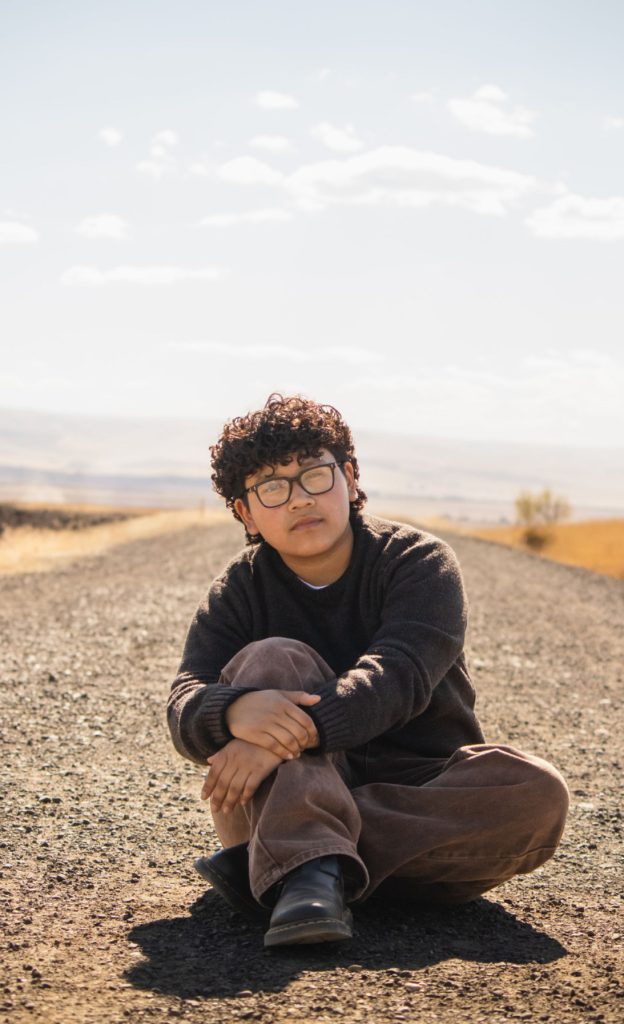 In my freshman year of high school, I believed effort was optional. Grades felt meaningless, ambition felt unnecessary, and college seemed like a place meant for someone else. In the small rural town where I grew up, that belief was not unusual. It was reinforced daily by the people around me and by the expectations I inherited at home. I went to school with the same classmates from elementary through high school, and familiarity quickly became a limit. Most of my friends shared the idea that school was something to get through rather than something to invest in. At home, the message was just as quiet but just as powerful. No one in my immediate family had attended college or completed high school, and over time, that absence shaped what I believed my future was supposed to look like. Surrounded by low expectations and unchallenged assumptions, I internalized the belief that higher education was not designed for people like me. It was only later that I began to understand how powerful that belief was, and how difficult it would be to unlearn.
What appears to be a personal choice is actually a systemic issue. Many students never actively choose to avoid advanced academic opportunities. Instead, they are never given the information necessary to pursue them. In my local school district, I experienced firsthand what it meant to have parents who were unaware of the academic options available beyond a traditional course pathway. Honors and Advanced Placement (AP) courses were never clearly explained to me or my family, largely due to miscommunication between schools and non-English-speaking households. It was not until my sophomore year that I realized advanced courses were optional and accessible. Entering honors classes exposed me to environments where creativity was encouraged and collaboration was prioritized, allowing me to better understand issues beyond what I had previously been taught.
However, stepping into these spaces also made something else immediately clear. No one looked like me, which made me feel like the only one in the room. I walked into my first honors English class as one of only three students of color. That realization was deeply discouraging. I questioned whether I belonged, why I felt different, and whether everyone else was somehow more capable than I was. Although I persisted through these doubts, the feeling of not truly belonging lingered and intensified as I entered more advanced classes with little representation. Several factors contribute to this reality, including imposter syndrome, underrepresentation, and the lack of targeted outreach to marginalized students. As a result, many students experience self-doubt and struggle to encourage themselves to continue along academic pathways where they see no one who reflects their identity or background.
The data supports this lived experience. In my high school here in Washington state, Hispanic students make up approximately forty-four percent of the student population, according to the Office of the Superintendent of Public Instruction. Yet in 2024, only nine percent of Latino students across the state participated in AP courses, according to AP Central. When examining participation across the Pacific Northwest, including Washington, Oregon, and Idaho, the average remains around eight-and-a-half percent. Even in regions with higher Latino populations, such as Arizona and New Mexico, participation rises only to approximately thirteen percent. In New York State, which is known for its cultural diversity, only twenty-four percent of high school students enroll in AP courses. These statistics demonstrate that this issue is not isolated to one district or region. It is a national, systemic problem.
While some argue that the current system offers structure and academic rigor, the data suggests that it fails to serve students equitably. Meaningful change requires intentional communication between schools, students, parents, and school counselors. Latino students deserve to be informed that AP courses can unlock access to scholarships, colleges, and internships. Without that support, many students simply accept the pathway placed in front of them, falling through the cracks they did not create. For students growing up in environments similar to mine, it is important to know that potential is not limited by circumstance. Opportunity expands when access is intentional.
Being the only one in the room is not just a personal feeling. It is the result of systems that fail to inform, encourage, and include students from marginalized backgrounds. When access to advanced coursework depends on chance conversations, family familiarity, or unspoken knowledge, opportunity becomes uneven by design. My experience is not unique, and the data makes that clear. Across the country, Latino students continue to be underrepresented in advanced academic spaces, not because of a lack of ability, but because of a lack of access and intentional support.
If schools are serious about equity, they must move beyond offering opportunities and begin actively guiding students and families toward them. This means clear communication with non-English-speaking households, early outreach, and representation within advanced classrooms. No student should have to question whether they belong in a space designed to help them grow. Being the only one in the room should not be a barrier to success, but a reminder of how much work remains to ensure that opportunity is truly available to all.
References:
- AP central (AP Central Data)
- OSPI (OSPI Data)